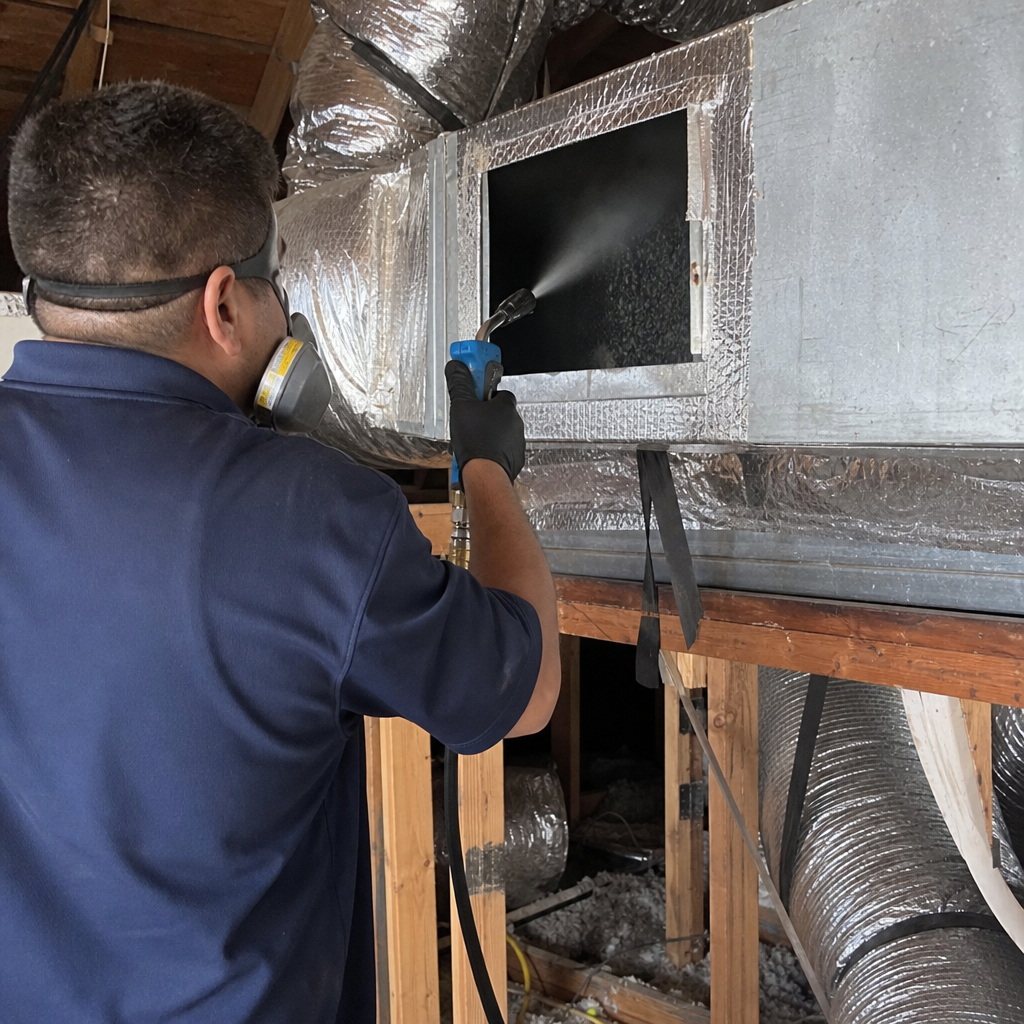
Fast, Reliable Air Quality & Sanitizing Across Live Oak
Air quality and sanitizing services in Live Oak, CA typically range from $275 for duct sanitizing to $1,850 for full UV light and air purifier installation, with most homeowners calling us during or immediately after fall harvest season when rice dust infiltration peaks. We’re familiar with the specific challenges facing Live Oak homes — from the 1950s–1980s ranch houses along Live Oak Boulevard to the aging flex-duct systems throughout the 95953 zip code — and we arrive prepared for the agrarian contamination cycle that standard suburban duct cleaners simply don’t encounter.
Steven Ramirez, our owner and lead technician, has been working Sacramento Valley duct systems for 20 years. He knows that a service call in Live Oak during September or October isn’t a routine cleaning — it’s a response to rice dust, chaff, and agricultural particulates that have overwhelmed standard filtration and settled deep into blower wheels and return-air boots. When you call (855) 677-0949, the person answering your questions is the same technician who’ll be at your door. No subcontractor handoffs. No rotating crews with rented equipment. Just direct owner accountability and professional-grade Rotobrush and Nikro systems on every job.
Why Empire Air Duct Cleaning Service San Jose Is Live Oak’s Preferred Air Quality & Sanitizing Company
Our Air Quality & Sanitizing team has built a track record that matters in a small town like Live Oak: 798 verified reviews averaging 4.9 stars, earned across hundreds of real homes where customers can verify who actually did the work. That reputation holds particular weight here, where word travels through neighborhood networks and a single bad experience with a franchise crew doesn’t stay quiet.
We respond to Live Oak calls with the urgency that harvest-season contamination demands. Rice dust doesn’t wait for a convenient appointment window — once it’s bypassed your filter and caked your blower wheel, airflow drops and microbial growth accelerates with every cycle. Our owner-operated structure means we can prioritize Live Oak homeowners during peak season without corporate dispatch layers slowing the response.
Our familiarity with Live Oak’s housing stock saves time and prevents misdiagnosis. We’ve worked on enough original 1970s flex-duct systems in this town to recognize deteriorating mastic and loose joints before we even enter the crawl space. We know which homes near the rice paddies need blower-wheel inspection first, and we understand how tule fog moisture interacts with aging duct insulation in ways that create mold problems unique to this corridor. That local knowledge translates to faster, more accurate service — and solutions that actually last.
Our Air Quality & Sanitizing Services in Live Oak
Mold Treatment
Live Oak’s tule fog season — roughly November through February — drapes persistent ground-level moisture across the Sacramento Valley for weeks at a time. In homes with original or once-replaced duct systems from the 1950s–1980s, that moisture condenses inside poorly sealed flex ducts with deteriorating insulation, creating the humid conditions that accelerate mold growth. We treat visible mold contamination with EPA-registered products applied through professional-grade fogging equipment, then identify and address the moisture source — often deteriorated mastic or failed duct joints that standard cleaning misses. For Live Oak homes, we typically recommend pairing mold treatment with duct sealing to prevent recurrence after the next fog season.
Bacteria Sanitizing
Agricultural particulates from rice harvest operations carry organic matter that supports bacterial colonization inside duct systems, particularly when combined with the humidity spikes of tule fog season. Our bacteria sanitizing service uses commercial-grade antimicrobial application throughout the duct network, not just surface wiping of accessible registers. In Live Oak, we pay particular attention to the return-air pathway — the same route rice dust travels — because that’s where organic loading concentrates and bacterial growth establishes. The process takes 2–3 hours for a typical single-family home and requires temporary evacuation during application, a step we never skip regardless of scheduling pressure.
Odor Removal
The musty odor that Live Oak homeowners notice after fog season isn’t “just how old houses smell” — it’s microbial volatile organic compounds off-gassing from damp duct interiors and trapped agricultural debris. Standard air fresheners mask the symptom; our odor removal service addresses the source through combination cleaning, sanitizing, and targeted deodorization. For persistent cases in older homes with significant mastic deterioration, we may recommend partial duct replacement or sealing to eliminate the reservoir of trapped particulates that keeps generating odor. We’ve found that Live Oak homes with original 1970s ductwork often need this combined approach — cleaning alone can’t remove odors from material that’s structurally compromised.
UV Light Installation
UV-C light installation provides continuous microbial inhibition inside the air handler and supply plenum, a significant advantage in Live Oak’s climate where seasonal moisture creates recurring growth conditions. We install Honeywell UV light systems sized to the specific air handler model, with lamp replacement schedules based on actual operating hours rather than arbitrary calendar dates. For Live Oak homes affected by both rice dust loading and fog-season humidity, UV lights reduce the microbial growth that would otherwise reestablish between annual cleanings. Installation typically runs $650–$1,200 depending on air handler accessibility and whether electrical modification is needed for older furnace configurations common in this market.
Allergen Reduction
Live Oak’s unique allergen profile combines agricultural particulates — rice dust, chaff, field-burning byproducts — with standard pollen and dander loads. Standard 1-inch pleated filters capture larger particles but miss the fine, powdery rice dust that defines harvest season here. Our allergen reduction service includes deep mechanical cleaning of the entire duct network with Rotobrush contact cleaning, followed by high-efficiency filtration upgrade recommendations and, where appropriate, whole-house air purifier installation using Aprilaire or Honeywell systems. For families with respiratory sensitivity, we often recommend starting with duct cleaning and filtration upgrade, then evaluating whether additional air purification is warranted based on measured particulate levels.
Air Purifier Installation
Whole-house air purifiers integrate with existing HVAC systems to provide continuous filtration beyond what duct cleaning alone can achieve. In Live Oak, we size and install Aprilaire and Honeywell systems based on home square footage, existing duct capacity, and specific contamination profiles — a rice-belt home with harvest-season peaks needs different capacity than an identical floor plan in urban Sacramento. Installation ranges from $1,200–$1,850 including electrical connection and controller integration. We don’t recommend air purifiers as a substitute for duct cleaning in homes with significant existing loading; the two services complement each other, with cleaning removing accumulated debris and purification preventing rapid reestablishment.
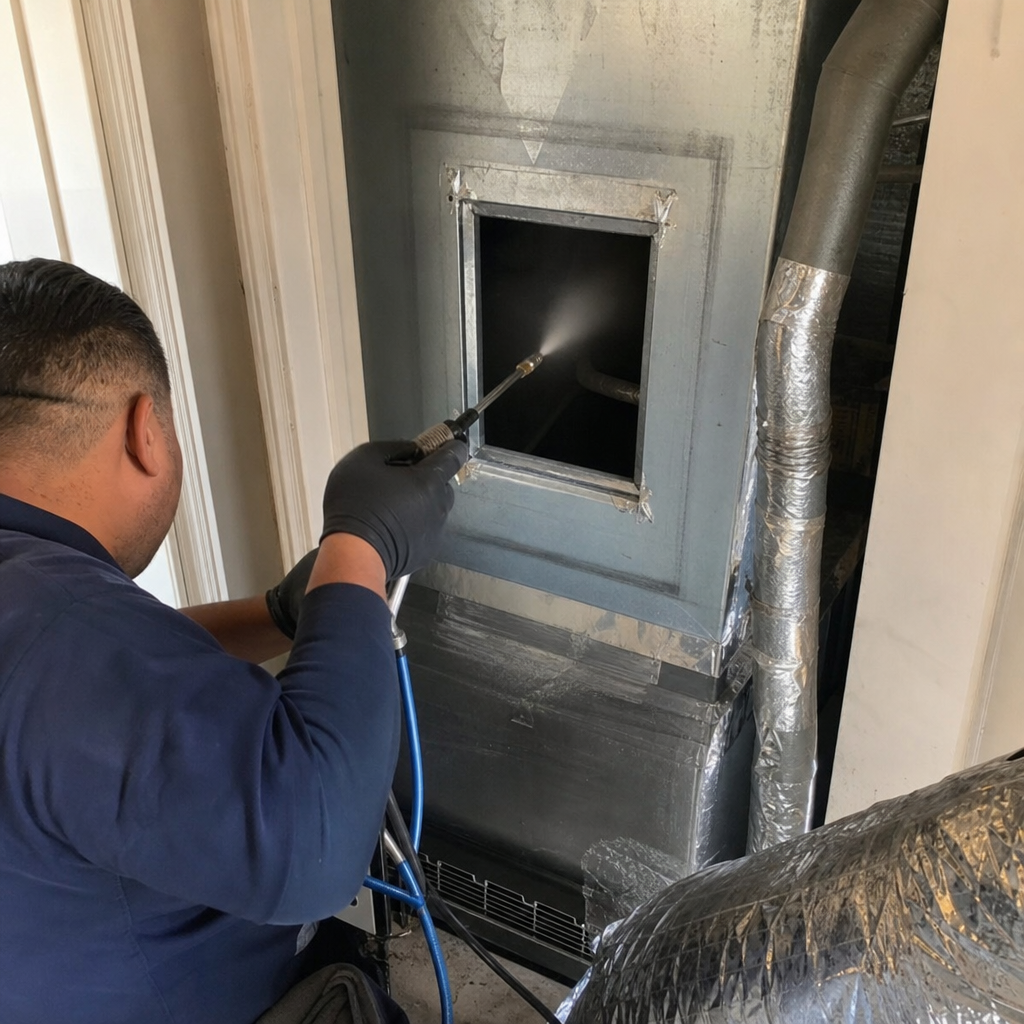
What happens when you call
- 1
A real person answersNo phone trees — you reach a local pro.
- 2
You get an upfront price rangeHonest numbers before anyone is dispatched.
- 3
A background-checked tech heads outLicensed & insured, dispatched right away.
- 4
You approve before work beginsNothing starts until you say go.
Trusted Brands We Service in Live Oak
We specify Honeywell, Aprilaire, and Abatement Technologies products for Live Oak installations because these manufacturers maintain California distribution networks that keep replacement lamps, filters, and components available without extended lead times. When a UV lamp fails during tule fog season or an air purifier filter loads early from harvest dust, waiting two weeks for parts isn’t acceptable. Our professional-grade cleaning equipment — Rotobrush contact cleaning systems and Nikro negative-air machines — delivers the mechanical agitation and controlled extraction that agricultural particulate loading demands. We don’t use consumer-grade rental equipment that lacks the suction capacity to remove caked rice dust from blower wheels and return boots. That equipment specificity matters in this market in ways it simply doesn’t for standard suburban duct cleaning.
Common Air Quality & Sanitizing Problems We See in Live Oak Homes
- Rice dust bypassing standard filters and caking blower wheels. The fine, powdery particulate from fall harvest operations passes through 1-inch pleated filters almost entirely, accumulating on blower fins and reducing airflow by 30–40% within a single season. Homeowners notice weak register flow first; by then, the blower often needs removal and manual cleaning.
- Tule fog moisture condensing inside aging flex ducts with failed insulation. Original 1970s ductwork throughout Live Oak’s housing stock has insulation that has compressed, torn, or separated from the flex core. Fog-season humidity condenses on the cool duct surface, creating the damp environment that supports mold growth between cleaning cycles.
- Deteriorated mastic and loose joints trapping agricultural debris season after season. The mastic sealant used in original construction has dried, cracked, or detached entirely in many Live Oak homes. Gaps at duct connections create turbulence that deposits particulates at joint locations, building contamination reservoirs that standard register cleaning never reaches.
- Musty odors returning within weeks of DIY or superficial cleaning. Without addressing the moisture source and trapped debris in compromised duct material, surface sanitizing provides only temporary relief. We see this pattern repeatedly in older homes where homeowners have paid for “duct cleaning” that never accessed the crawl space or inspected mastic condition.
Pricing for Air Quality & Sanitizing in Live Oak, CA
Most Live Oak homeowners invest between $275 and $1,850 for air quality and sanitizing services, with specific ranges varying by scope and home configuration:
| Service | Typical Range in Live Oak |
|---|---|
| Duct sanitizing (bacteria/mold) | $275 – $450 |
| Mold treatment with source remediation | $450 – $850 |
| Odor removal (cleaning + deodorization) | $350 – $650 |
| UV light installation | $650 – $1,200 |
| Whole-house air purifier installation | $1,200 – $1,850 |
| Allergen reduction package (cleaning + filtration upgrade) | $450 – $750 |
Factors that affect your specific cost: extent of existing contamination (heavy rice dust loading requires longer cleaning time), accessibility of ductwork in crawl spaces or attics, condition of existing mastic and joints (repairs add scope), and whether electrical modification is needed for UV or purifier installation in older furnace configurations. Homes with original 1950s–1980s duct systems typically require more preparatory work than newer construction. We provide written, itemized estimates before any work begins — call (855) 677-0949 to schedule a free assessment.
We Also Serve Cities Near Live Oak
Our service area extends throughout the Sacramento Valley and into the East Bay, including Livermore, Dublin, Castro Valley, and Pleasanton. While each market has distinct contamination profiles — none face the rice-belt particulate loading that defines Live Oak — our owner-operated model and professional equipment deliver consistent results across all locations.
Serving Live Oak, CA — Our Local Coverage Area
We’re based in the Live Oak area and know this community well. Use the map below to see our service coverage — if you’re nearby, we can almost certainly help.
FAQs — Air Quality & Sanitizing in Live Oak
Fall harvest sends dense clouds of rice dust, chaff, and agricultural particulates into residential HVAC intakes, creating a seasonal contamination cycle that peaks every September and October and doesn’t occur in urban markets like Yuba City or Sacramento. The fine, powdery dust bypasses standard 1-inch filters and accumulates on blower wheels and in ductwork, reducing airflow and supporting microbial growth when tule fog moisture arrives. If your system seems to struggle every fall, you’re not imagining it — call (855) 677-0949 for an inspection and estimate; estimates are free.
Recurring mold typically indicates an unresolved moisture source — deteriorated duct insulation, failed mastic seals, or crawl space humidity from tule fog season — rather than inadequate cleaning. Surface mold removal without addressing the damp environment that supports growth wastes money. We inspect mastic condition, insulation integrity, and crawl space moisture levels before recommending treatment, then specify sealing or repair work to prevent recurrence. Call (855) 677-0949 and we’ll diagnose the actual source rather than selling you another cleaning cycle.
No — the fine, powdery consistency of rice dust passes through even high-MERV 1-inch pleated filters, and denser filters can actually restrict airflow in older Live Oak systems with undersized return ducts. Effective rice dust management requires source reduction (sealing duct leaks that draw unfiltered attic or crawl space air), mechanical cleaning of accumulated loading, and in some cases upgraded filtration with properly sized housing. A filter upgrade alone, without addressing the duct system’s condition, won’t solve the problem. We can assess whether your system can support upgraded filtration without airflow compromise — call for a free evaluation.
Yes — but with realistic expectations about what sanitizing alone can achieve in homes with original 1970s ductwork and deteriorated mastic. Sanitizing kills existing microbial contamination but doesn’t restore failed insulation or seal loose joints. For many Live Oak homes, we recommend sanitizing combined with targeted sealing or partial duct replacement to address the material conditions that trap agricultural particulates and harbor moisture. The combination approach costs more upfront but eliminates the cycle of repeated sanitizing with temporary results. We’ll inspect your specific duct condition and give you an honest assessment of whether sanitizing alone makes sense.
The most effective approach combines mechanical duct cleaning to remove the debris and biofilm generating the odor, sanitizing to kill active microbial growth, and moisture source control — typically sealing duct leaks and addressing crawl space humidity pathways. Air fresheners, register sprays, or ozone treatments without cleaning address symptoms only; the odor returns when fog season moisture reactivates the remaining contamination. For persistent cases in homes with significant mastic deterioration, we may recommend partial duct replacement to eliminate material that has become a permanent odor reservoir. Call (855) 677-0949 for an inspection that identifies your specific source.
Contact Empire Air Duct Cleaning Service San Jose for Live Oak Air Quality & Sanitizing
If you’re noticing reduced airflow, musty odors after fog season, or that characteristic dust accumulation that arrives every fall harvest, your duct system is telling you something specific about Live Oak’s unique environment. Steven Ramirez has spent 20 years learning to read these signals in Sacramento Valley homes — and 798 customer reviews at 4.9 stars reflect what happens when that experience arrives at your door, not a subcontractor with a rented machine.
We provide free, written estimates with itemized scope and no pressure to commit on the spot. Call (855) 677-0949 to schedule your Live Oak air quality assessment. The owner is the technician. The equipment is professional-grade. And the advice is based on what we’ve actually seen in homes like yours, not a franchise script.
Written by Steven Ramirez, Owner at Empire Air Duct Cleaning Service San Jose, serving Live Oak and the Sacramento Valley since 2004.